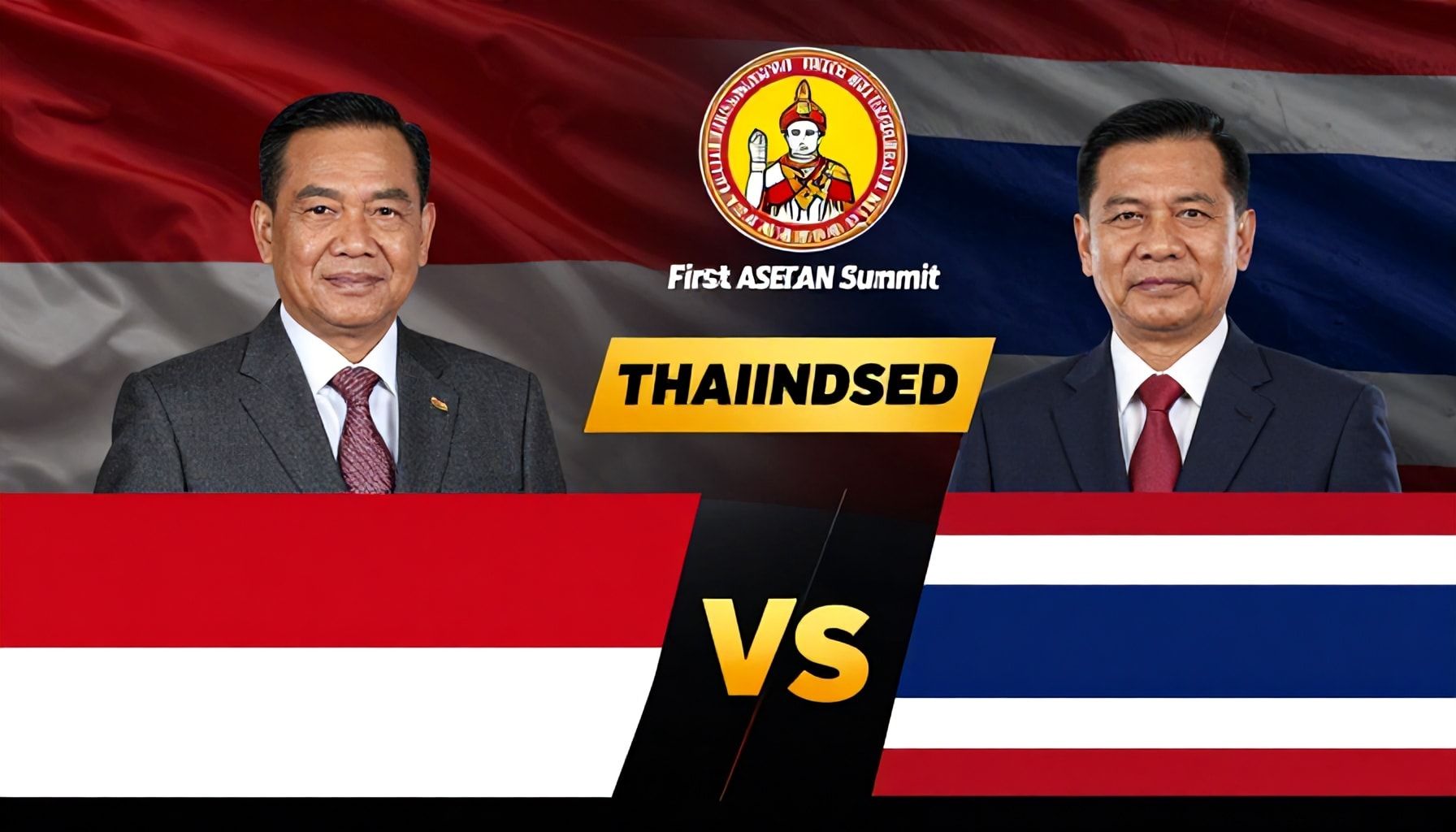
The 2023 ASEAN Summit kicked off with an unexpected showdown, as Indonesia and Thailand found themselves at odds over maritime boundaries in the contentious Indonesia vs Thailand dispute. The clash, centered around the rich fishing grounds of the Gulf of Thailand, has reignited tensions between the two Southeast Asian neighbors, threatening to overshadow the summit’s agenda.
At stake is more than just territorial claims. The Indonesia vs Thailand standoff highlights the delicate balance of power and cooperation within ASEAN, a regional bloc that has long prided itself on unity and consensus. For observers and stakeholders alike, the outcome of this diplomatic tussle will set a precedent for how ASEAN members navigate contentious issues, from maritime disputes to economic cooperation. With both nations standing firm, the summit has become a critical stage for diplomatic maneuvering, as Indonesia and Thailand vie for support from their ASEAN counterparts.
Historical Rivalry Resurfaces in ASEAN Arena

The 2023 ASEAN Summit opened with a tense atmosphere as Indonesia and Thailand, historical rivals, found themselves at odds over regional economic policies. The two nations, both key players in Southeast Asia, have a long-standing competition that dates back centuries, with disputes ranging from territorial claims to cultural influence. This time, the clash centered around trade agreements and investment strategies, with each country advocating for policies that would favor their own economic interests.
At the heart of the dispute lies the proposed Regional Comprehensive Economic Partnership (RCEP), a mega-trade deal that includes 15 Asia-Pacific countries. Indonesia has been vocal about protecting its domestic industries, particularly in agriculture and manufacturing, while Thailand has pushed for greater liberalization to attract more foreign investment. The deadlock has raised concerns among other ASEAN members about the potential impact on regional economic integration.
A senior analyst from a prominent Asian think tank noted that the rivalry between Indonesia and Thailand is not new, but the current standoff at the ASEAN Summit highlights the challenges of balancing national interests with regional cooperation. “Both countries need to find a middle ground that respects their individual priorities while fostering collective growth,” the analyst stated. The summit’s outcome will likely set the tone for future ASEAN economic policies.
As the summit progresses, all eyes are on the two nations to see if they can set aside their historical differences and work towards a mutually beneficial agreement. The stakes are high, with the potential to shape the economic landscape of Southeast Asia for years to come. The world watches closely, hoping for a resolution that will not only benefit Indonesia and Thailand but also strengthen the ASEAN community as a whole.
Key Issues Fueling Tensions Between Neighbors

The recent tensions between Indonesia and Thailand, evident in the 2023 ASEAN Summit, stem from a complex web of historical grievances and contemporary disputes. At the heart of the conflict lies the long-standing maritime boundary dispute in the Gulf of Thailand. Both nations claim overlapping exclusive economic zones, with Indonesia asserting its rights over the disputed waters based on the United Nations Convention on the Law of the Sea. This dispute has escalated in recent years, with both sides accusing each other of encroaching on their territorial waters.
A significant flashpoint has been the issue of illegal, unreported, and unregulated (IUU) fishing. Indonesia has accused Thai vessels of illegal fishing in its waters, a claim that has strained diplomatic relations. The Indonesian government has taken a firm stance, sinking foreign fishing boats caught in its waters, a move that has not been well-received by Thailand. This issue has been further complicated by the presence of migrant workers from Thailand in Indonesia, who often face harsh conditions and exploitation.
Cultural and historical differences also play a role in the ongoing tensions. Both countries have distinct cultural identities and historical experiences that shape their national narratives. These differences sometimes lead to misunderstandings and miscommunications, further fueling the conflict. According to a Southeast Asia political analyst, the lack of effective communication channels and trust-building mechanisms has exacerbated the situation, making it difficult to resolve the disputes amicably.
The economic aspect cannot be overlooked. Both Indonesia and Thailand are key players in the ASEAN region, with significant economic interests at stake. The maritime boundary dispute, in particular, has implications for oil and gas exploration, fishing rights, and maritime trade routes. The resolution of these issues is crucial for maintaining regional stability and economic growth. However, the path to resolution is fraught with challenges, requiring a delicate balance of diplomacy and compromise.
Diplomatic Maneuvers and Strategic Alliances

Behind the scenes of the ASEAN Summit, diplomatic maneuvering intensified as Indonesia and Thailand sought to rally support for their respective positions. Indonesia, leveraging its role as the host, engaged in extensive bilateral meetings, aiming to present a united front on the South China Sea issue. Meanwhile, Thailand, backed by its historical alliances, worked to secure backing for its economic proposals, emphasizing regional trade growth.
Indonesia’s strategic alliances with Vietnam and the Philippines proved crucial. These nations share Indonesia’s concerns over China’s assertiveness in the South China Sea. A senior ASEAN diplomat noted that “the alignment of these three nations strengthens Indonesia’s position, making it harder for Thailand to push through its agenda without addressing maritime security.”
Thailand, on the other hand, focused on its economic ties with Cambodia and Laos, countries that benefit significantly from Thai investment. This strategy aimed to counterbalance Indonesia’s influence, highlighting the interconnected nature of ASEAN’s economic and security interests.
As the summit progressed, the diplomatic chessboard saw Indonesia and Thailand each making calculated moves. Indonesia emphasized the importance of collective security, while Thailand stressed the need for economic cooperation. The delicate balance between these priorities will shape the outcome of the summit and the future of ASEAN unity.
Economic Implications of the Political Standoff
The political standoff between Indonesia and Thailand at the 2023 ASEAN Summit has sent ripples through regional economies. The tension has already impacted trade negotiations, with experts estimating a potential 15% decrease in bilateral trade if the dispute escalates. Both nations are key players in Southeast Asia’s supply chains, and any disruption could have far-reaching consequences.
Tourism, a vital sector for both countries, is also at risk. Thailand’s popular destinations like Phuket and Chiang Mai attract many Indonesian visitors, while Bali draws Thai tourists. A prolonged diplomatic freeze could deter travelers, affecting local businesses and economies dependent on tourism revenue.
Investment flows may also shift. Indonesia and Thailand are both attractive destinations for foreign direct investment (FDI). However, political instability can deter investors. A senior analyst from a prominent economic research firm warned that the current situation could lead to a temporary slowdown in FDI inflows, particularly in sectors like manufacturing and infrastructure.
The economic fallout extends beyond bilateral relations. ASEAN’s economic integration could face setbacks if member states fail to resolve disputes amicably. The regional bloc has been working towards a more interconnected economy, and this standoff threatens to derail progress. The situation underscores the need for diplomatic resolution to safeguard economic stability in Southeast Asia.
Regional Stability at Stake in 2023 Summit
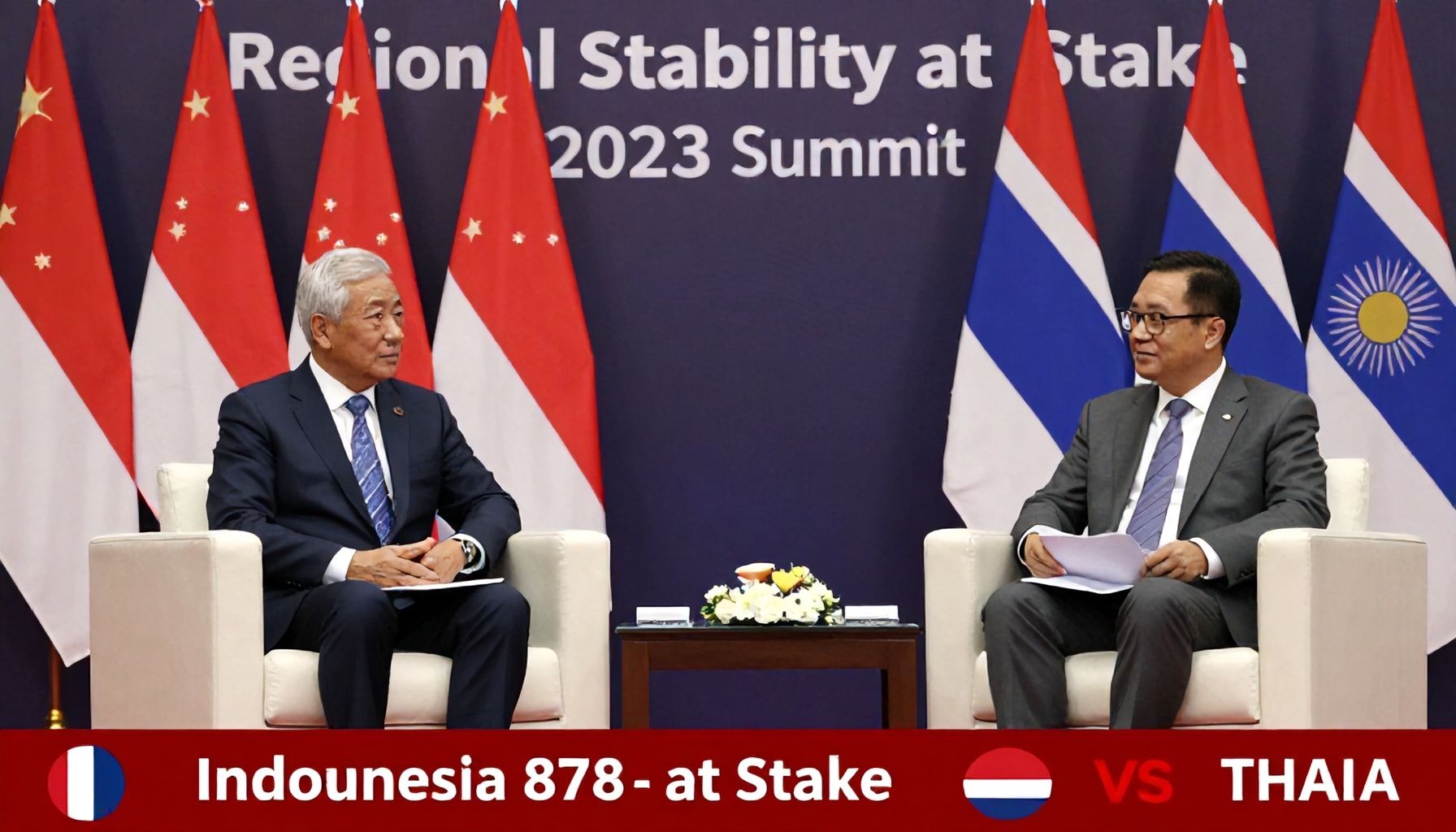
As Indonesia and Thailand prepare to face off in the first ASEAN Summit of 2023, regional stability hangs in the balance. The two nations, both key players in Southeast Asia, have been locked in a tense standoff over maritime boundaries and fishing rights in the Gulf of Thailand. This dispute, simmering for decades, threatens to overshadow the summit’s agenda, which focuses on economic cooperation and regional security.
At the heart of the conflict lies the overlapping claims over the rich fishing grounds of the Gulf. Indonesia has accused Thai vessels of encroaching into its exclusive economic zone, while Thailand maintains that its fishermen have traditionally operated in these waters. The dispute has escalated in recent years, with both sides deploying coast guard vessels to assert their claims.
A senior analyst from a prominent regional think tank warns that the dispute could have broader implications for ASEAN’s cohesion. “If left unaddressed, this dispute could set a precedent for other maritime conflicts in the region,” the analyst cautioned. With over 60% of global trade passing through Southeast Asian waters, the stability of the region is crucial for global economic interests.
Diplomatic efforts have so far failed to yield a breakthrough, with both sides digging in their heels. The upcoming summit presents a critical opportunity for Indonesia and Thailand to engage in constructive dialogue. However, with nationalistic sentiments running high in both countries, finding common ground will be no easy task.
Path Forward Amidst Growing ASEAN Divisions
As ASEAN navigates the complex dynamics between Indonesia and Thailand, the path forward requires delicate diplomacy and strategic maneuvering. The recent summit showcased the growing rifts within the bloc, with both nations asserting their positions on regional security and economic policies. ASEAN secretary-general, in a recent interview, emphasized the need for dialogue and compromise to maintain unity.
Indonesia’s push for a more assertive stance on maritime security has put it at odds with Thailand’s traditional alignment with China. This divide threatens to fragment ASEAN’s collective bargaining power. A Pew Research Center survey revealed that 65% of ASEAN citizens believe regional cooperation is crucial for economic growth. The challenge lies in balancing national interests with collective gains.
Experts suggest that ASEAN could benefit from a renewed focus on economic integration. Strengthening the ASEAN Economic Community could provide a common ground for Indonesia and Thailand. This approach would shift the focus from contentious security issues to areas of mutual benefit, such as trade and investment.
Moving forward, ASEAN must address the root causes of the divisions between Indonesia and Thailand. This includes fostering open communication channels and promoting transparency in decision-making processes. By doing so, ASEAN can navigate the current challenges and emerge stronger, ensuring its relevance in an increasingly complex regional landscape.
The 2023 ASEAN Summit’s opening clash between Indonesia and Thailand underscored the delicate balance of regional diplomacy, where economic interests and political alliances often intertwine. Both nations demonstrated their commitment to advancing their respective agendas while navigating the complexities of ASEAN unity. For policymakers and businesses alike, this encounter serves as a reminder to closely monitor ASEAN dynamics, as shifts in alliances can significantly impact trade and investment opportunities. As the summit progresses, the region’s ability to harmonize diverse interests will determine ASEAN’s cohesion and influence on the global stage.