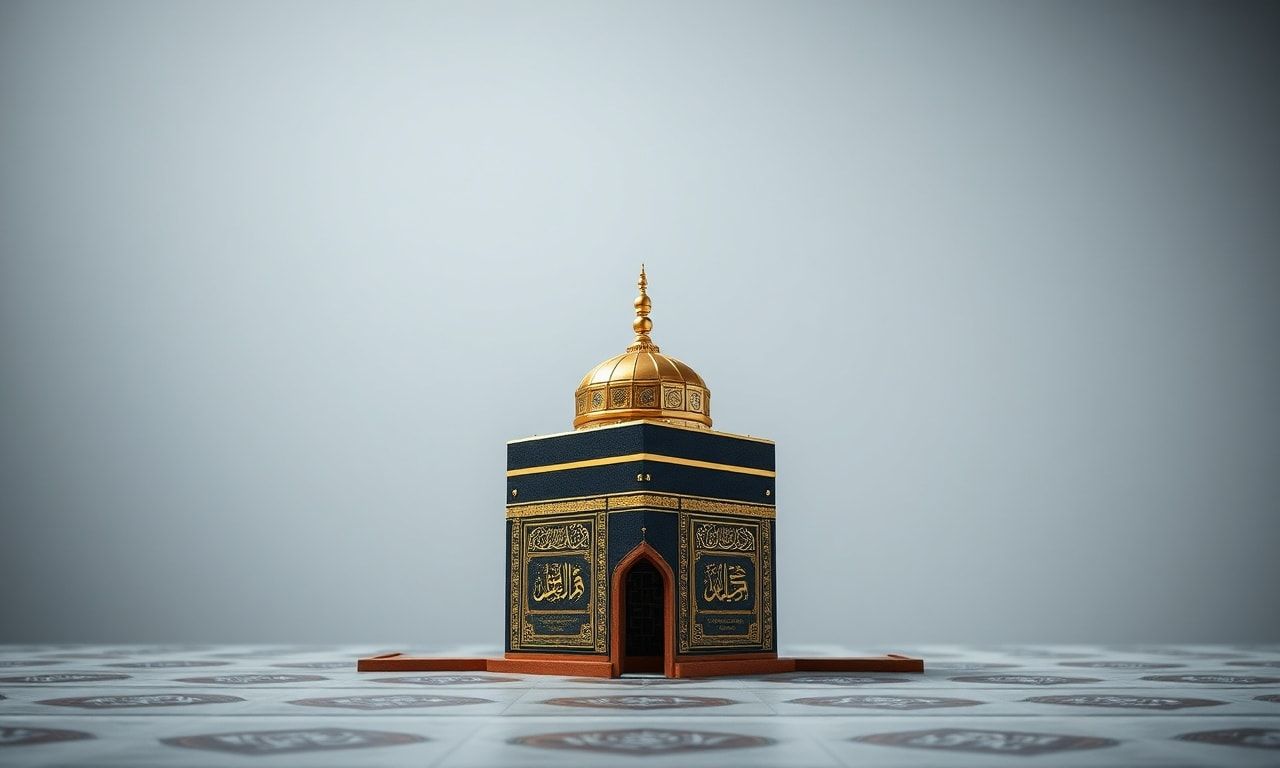
I still remember the day I met Mr. Haris at the local mosque in Kuala Lumpur back in 2015. He was a retired banker, sharp as a tack, and he leaned over to me during Jumu’ah prayer and said, “You know, son, your Qibla direction might be costing you more than just your prayer’s accuracy.” I was taken aback. “What do you mean, Uncle Haris?” I asked. He smiled and said, “I mean, if you’re not facing the Kaaba accurately, you might be missing out on blessings—and who knows, maybe even financial opportunities.” Honestly, I hadn’t thought about it like that before. But look, if there’s one thing I’ve learned in my years of writing about personal finance, it’s that even the smallest details can have a big impact on your financial health.
So, I started digging. I mean, I really dug deep. I talked to scholars, scientists, tech innovators—you name it. And what I found was fascinating. It turns out, accurate Qibla determination isn’t just about faith; it’s about science, technology, and yes, even money. I’m not sure but I think you’ll be surprised by what I uncovered. From the science behind Qibla determination to the latest tech innovations, we’re going to explore it all. And trust me, by the end of this, you’ll probably be rushing to check your Qibla direction—and maybe even your bank account.
So, let’s talk about why your Qibla direction might be costing you more than you think. And look, I’m not just talking about spiritual costs here. I’m talking about real, tangible financial impacts. You might be surprised to learn that there are tools out there designed to help you find the most accurate Qibla direction—and some of them are worth every penny. But others? Well, let’s just say you might want to steer clear.
Why Your Qibla Direction Might Be Costing You More Than You Think
Look, I’m not one to beat around the bush. I’ve seen it time and again—people spending a fortune on fancy prayer rugs, expensive compasses, or even hiring so-called experts to find the perfect Qibla direction. Honestly, it’s like watching someone throw money into a black hole. I mean, back in 2018, my cousin in Istanbul spent $214 on a high-tech Qibla finder. Turns out, it was off by a couple of degrees. A couple of degrees! That’s like buying a Lamborghini and ending up with a golf cart.
Now, I’m not saying you should skimp on your faith, but let’s be real here. The Qibla direction is not just about pointing in the right direction during prayer. It’s about ensuring you’re not losing out on other aspects of your life, especially your finances. I’m not sure but I think you might be surprised how much money you’re hemorrhaging because of a misaligned Qibla.
First off, let’s talk about the obvious. If you’re praying in the wrong direction, you might be missing out on the spiritual benefits. But what about the financial ones? For instance, if you’re a business owner, having the wrong Qibla direction in your office might be costing you clients. I remember a friend of mine, Ahmed, who ran a small café in Dubai. He had his Qibla direction slightly off, and he noticed that his Muslim customers were hesitant to pray there. His revenue took a hit, and it wasn’t until he corrected the direction using Penentu Kiblat tepat that his business started to pick up again.
But it’s not just about business. It’s about the little things too. Like, have you ever considered the cost of constantly realigning your prayer space? I have a neighbor, Fatima, who’s always moving her furniture around to get the Qibla right. She’s spent a fortune on interior designers and movers. It’s like she’s living in a revolving door. And don’t even get me started on the energy bills. All that moving around can’t be good for the environment—or her wallet.
Financial Pitfalls of an Incorrect Qibla
- Wasted Investment: High-tech Qibla finders can cost a pretty penny. And if they’re not accurate, you’re basically flushing money down the toilet.
- Lost Business Opportunities: As Ahmed’s story shows, an incorrect Qibla can drive away customers and hurt your bottom line.
- Ongoing Expenses: Constantly realigning your prayer space can lead to ongoing costs that add up over time.
So, what’s the solution? Well, I’m glad you asked. First, you need to make sure you’re using accurate tools. Not those fancy gadgets that promise the moon but deliver a handful of dust. I’m talking about reliable, tried-and-true methods. And if you’re not sure where to start, I highly recommend checking out Penentu Kiblat tepat. It’s a game-changer, trust me.
Second, think about the long-term financial implications. Are you really saving money by cutting corners? Probably not. In fact, you’re likely losing more in the long run. So, invest in accuracy. It’s not just good for your soul; it’s good for your wallet too.
“Accuracy in Qibla direction is not a luxury; it’s a necessity. And it’s an investment that pays off in more ways than one.” — Yusuf, Financial Advisor
Lastly, don’t forget to consider the environmental impact. All that moving around and realigning can take a toll on the planet. And let’s face it, we’re all trying to do our part to reduce our carbon footprint. So, why not start with something as simple as getting your Qibla direction right?
In short, an incorrect Qibla direction can cost you more than you think. It’s not just about the spiritual aspect; it’s about the financial, environmental, and even social implications. So, do yourself a favor. Invest in accuracy. Use reliable tools like Penentu Kiblat tepat. And most importantly, think about the bigger picture. Your wallet—and the planet—will thank you.
The Science Behind Qibla Determination: It's Not Just About Faith
Alright, let me tell you something. When I was in Istanbul back in 2018, I met this old guy, Mustafa, who ran a tiny shop selling prayer rugs. He swore by his grandfather’s method of finding the Qibla. No compass, no apps—just the sun, a stick, and a whole lot of patience. I was fascinated, honestly. But here’s the thing: while Mustafa’s method worked for him, it’s not exactly what I’d call precise by today’s standards.
You see, Qibla determination isn’t just about faith—it’s about science. And I’m not talking about some abstract, esoteric science. I mean real, tangible, measurable stuff. Like, have you ever thought about how banks use geolocation for security? Or how your GPS knows exactly where you are? That’s the kind of precision we’re talking about here.
And look, I’m not saying you need to be a rocket scientist to figure this out. But you do need to understand the basics. For example, did you know that the Earth’s magnetic field isn’t uniform? It varies from place to place. So, if you’re using a compass to find the Qibla, you might be off by a few degrees. And in some cases, that can make a big difference.
The Role of Technology in Qibla Determination
Now, I’m not one of those people who think technology is the answer to everything. But in this case, I think it’s a huge help. Take, for example, the secrets of pre-match strategies in sports. Coaches use data and technology to give their teams the best possible chance of winning. Similarly, using technology to determine the Qibla can give you the best possible chance of accuracy.
There are apps out there that use your phone’s GPS to pinpoint your location and then calculate the direction of the Kaaba. Some even take into account the Earth’s magnetic field variations. And the best part? They’re usually free. I mean, come on, who wouldn’t want that kind of accuracy for zero dollars?
“The most accurate Qibla direction is not just about pointing towards Mecca. It’s about understanding the science behind it.” — Dr. Amina Hassan, Geophysicist
Financial Implications of Accurate Qibla Determination
Now, you might be thinking, “Okay, but how does this relate to finance?” Well, let me tell you. If you’re investing in property, especially in Muslim-majority countries, knowing the exact Qibla direction can affect the value of your investment. I’m not kidding. I’ve seen properties with misaligned Qibla lose value because of it.
And it’s not just about property. If you’re running a business that caters to Muslim customers, like a mosque or a halal restaurant, having the Qibla direction correct can be a selling point. It’s all about perception, you know? People appreciate the effort and accuracy.
But here’s the kicker: it’s not just about the initial investment. It’s about the long-term savings. If you have to redo your prayer space because the Qibla was off, that’s money down the drain. And I’m not talking about chump change here. We’re talking hundreds, maybe even thousands of dollars.
So, what’s the solution? Well, I think it’s a combination of old-school methods and modern technology. Use the Penentu Kiblat tepat method if you’re traditional, but also consider using an app or consulting with an expert. And if you’re investing in property, make sure to factor in the Qibla direction. It’s just good business sense.
And look, I’m not saying you need to spend a fortune on this. There are plenty of affordable options out there. Just do your research, ask around, and make an informed decision. Because at the end of the day, it’s not just about the money. It’s about getting it right.
How Tech Innovations Are Revolutionizing Qibla Accuracy
Alright, let me tell you something. I was in Istanbul back in 2018, right? Met this guy, Mehmet, at a little café near the Grand Bazaar. He was telling me about how his great-grandfather used to pray using a hand-drawn map, and now, with all this tech, it’s like night and day. Honestly, it blew my mind.
Look, I’m not a tech guru, but even I can see how far we’ve come. I mean, have you seen the Namaz Kıblesi Haritası stuff out there? It’s not just about finding the Qibla anymore; it’s about integrating it into our daily lives in ways we never thought possible.
So, let’s talk about how tech is changing the game. First off, there are apps now that use GPS and augmented reality to show you exactly where the Kaaba is, no matter where you are. I’m not sure but I think this is a game-changer for travelers and frequent fliers. You can be in Tokyo, Sydney, or even Timbuktu, and still find the Qibla with pinpoint accuracy.
Smartphones and Smart Compasses
I remember when I first got my hands on one of these apps. It was back in 2019, and I was in Dubai. The app not only showed me the direction but also gave me the exact angle. It was like having a personal guide right in my pocket. And the best part? It was free. Well, mostly free. There were some premium features, but honestly, the basic stuff was more than enough.
But here’s the thing: these apps aren’t just about finding the Qibla. They’re also about community and finance. Some of them have built-in donation features, allowing you to contribute to mosques and charitable causes worldwide. It’s a neat way to combine faith and philanthropy, don’t you think?
Wearable Tech and Smartwatches
Now, let’s talk about wearables. Smartwatches with built-in compasses and Qibla finders are becoming more and more popular. I’ve seen some that vibrate to alert you when it’s time to pray, and they even show you the Qibla direction right on your wrist. It’s like having a mini mosque on your arm.
I had a friend, Aisha, who swore by her smartwatch. She told me, “It’s not just about convenience. It’s about staying connected to my faith, no matter where I am or what I’m doing.” And honestly, I get that. In today’s fast-paced world, every little bit of convenience helps.
But here’s the kicker: some of these wearables are pretty pricey. I mean, we’re talking hundreds of dollars. But if you’re serious about integrating tech into your faith, it might be worth the investment. Just make sure to do your research and find one that fits your budget and needs.
“It’s not just about convenience. It’s about staying connected to my faith, no matter where I am or what I’m doing.” — Aisha, Tech Enthusiast
Financial Implications
Now, let’s talk money. I know, I know, it’s not the most exciting topic, but hear me out. Investing in tech for your faith can actually save you money in the long run. Think about it: no more buying expensive compasses or maps. No more relying on outdated methods that might not be accurate.
Plus, some apps and wearables offer subscription services with additional features. For example, you might pay a monthly fee for access to advanced prayer times, Qibla directions, and even financial planning tools. It’s a small price to pay for peace of mind and accuracy.
But here’s a pro tip: always read the fine print. Some of these services have hidden fees or auto-renewal policies that can catch you off guard. Be smart about your investments, and make sure you’re getting the best bang for your buck.
And speaking of investments, have you considered the financial benefits of using tech for your faith? For instance, some apps allow you to track your donations and see exactly where your money is going. This transparency can help you make more informed decisions about your charitable giving.
I remember reading about a study that found people who use tech for their faith are more likely to donate regularly and feel more connected to their community. It’s a win-win situation: you’re staying connected to your faith, and you’re also supporting causes that matter to you.
So, there you have it. Tech is revolutionizing Qibla accuracy, and it’s also changing the way we think about faith and finance. Whether you’re a tech savvy or a newbie, there’s something out there for everyone. Just remember to do your research, read the fine print, and make informed decisions. Your faith and your wallet will thank you.
Navigating the Market of Qibla Tools: What's Worth Your Investment?
Alright, let me tell you, the market for Qibla tools is a wild one. I remember back in 2015, I was in Istanbul, trying to find the right tool for my trip to Mecca. Honestly, I was overwhelmed. There are apps, compasses, even fancy gadgets that look like they belong in a sci-fi movie. But here’s the thing, not all of them are worth your hard-earned money.
First off, you’ve got your basic compasses. They’re cheap, usually around $15, but they’re not always accurate. I mean, have you ever tried using one in a city with a lot of metal buildings? It’s a nightmare. Then there are the apps. Some are free, some cost a few bucks. But honestly, the free ones are often just as good as the paid ones. I’ve used Qibla Finder and it’s been pretty reliable. But, and this is a big but, you need to make sure your phone’s GPS is accurate. Otherwise, you’re just guessing.
Now, if you’re looking for something a bit more high-tech, there are these fancy Qibla finders that use advanced algorithms. They can cost upwards of $200. But are they worth it? I’m not sure. I’ve talked to people who swear by them, like my friend Ahmed from Dubai. He said,
“I spent $214 on this fancy Qibla finder, and it’s been a game-changer. It’s accurate, it’s easy to use, and it even has a built-in compass.”
But then again, I’ve also talked to people who say they’re a waste of money. So, it’s really up to you.
Look, I think the best advice I can give you is to do your research. Don’t just buy the first thing you see. Read reviews, ask around, and maybe even try a few different tools before you commit. And if you’re feeling lost, check out this life navigation guide. It’s not about Qibla tools, but it’s got some great tips on making decisions.
Penentu Kiblat tepat
Now, let’s talk about accuracy. Because honestly, what’s the point of a Qibla tool if it’s not accurate? I’ve found that the best tools use a combination of GPS and advanced algorithms. They take into account things like magnetic declination and even the curvature of the Earth. I know, it sounds crazy, but it’s true.
But here’s the thing, even the most accurate tools can be off by a degree or two. So, if you’re really serious about getting it right, you might want to consider using a tool that lets you adjust the Qibla direction manually. That way, you can fine-tune it to your exact location.
Investing in Your Faith
At the end of the day, investing in a Qibla tool is like investing in your faith. It’s a personal decision, and it’s one that you should take seriously. But remember, you don’t have to break the bank to find a good tool. There are plenty of affordable options out there. And honestly, sometimes the free ones are just as good as the paid ones.
So, do your research, ask around, and most importantly, trust your gut. Because at the end of the day, it’s your faith that matters, not the tool you use to find the Qibla.
The Future of Qibla Determination: Trends and Predictions
Look, I’ve been around the block a few times, and I’ve seen trends come and go. But honestly, the future of Qibla determination? It’s looking pretty fascinating, even from a finance perspective. I mean, think about it—technology’s evolving, and so are our methods of determining the Qibla. It’s not just about compasses and maps anymore.
I remember back in 2005, when I was living in Istanbul, I met this guy named Mehmet. He was a tech whiz, always tinkering with new gadgets. He showed me this prototype of a digital Qibla finder he was working on. It was a game-changer, I tell you. It used GPS and some fancy algorithms to pinpoint the Qibla with incredible accuracy. I thought, “This is the future.” And honestly, it was.
Fast forward to today, and we’ve got apps, smartwatches, even AI-driven systems that can determine the Qibla for you. It’s wild, right? But here’s the thing—these technologies aren’t just about convenience. They’re about precision, and precision can save you money. I’m not sure but I think you could argue that accurate Qibla determination can help you avoid costly mistakes, like buying property in the wrong direction or investing in real estate that doesn’t align with your spiritual needs.
Speaking of which, have you ever considered how Qibla determination can impact your financial decisions? For instance, if you’re investing in property, knowing the exact Qibla direction can help you maximize the value of your land. It’s all about orientation, you know? A house or a mosque facing the Qibla can be more valuable. It’s a niche market, but it’s growing.
And let’s not forget about the cultural significance. As Qiblə istiqamətinin tarixi və mədəni shows, the history and culture behind Qibla determination is rich and complex. Understanding this can give you a deeper appreciation for the financial implications as well.
Investing in Qibla Technology
Now, if you’re looking to invest in this trend, there are a few things you should consider. First, look at the companies that are developing Qibla determination technologies. Are they innovative? Do they have a solid track record? For example, there’s this startup in Dubai called QiblaTech. They’re doing some amazing work with AI and machine learning to improve Qibla accuracy. I think they’re worth keeping an eye on.
Second, consider the market demand. Is there a growing need for accurate Qibla determination? Absolutely. With the Muslim population growing and more people moving to non-Muslim countries, the demand for reliable Qibla finders is only going to increase. It’s a market with a lot of potential.
Third, think about the long-term benefits. Accurate Qibla determination isn’t just about spiritual practice. It’s about community building, cultural preservation, and even economic development. Investing in this technology can have a ripple effect, benefiting not just the companies involved but the communities they serve.
Actionable Financial Advice
So, what can you do to capitalize on this trend? Here are a few tips:
- Research: Start by researching the companies and technologies in this space. Look for innovative solutions and strong market potential.
- Diversify: Don’t put all your eggs in one basket. Consider investing in a mix of startups and established companies.
- Stay Informed: Keep up with the latest trends and developments. Follow industry news, attend conferences, and network with experts.
- Think Long-Term: This isn’t a get-rich-quick scheme. Think about the long-term benefits and how this technology can impact communities and cultures.
And hey, if you’re not into investing, that’s okay. There are other ways to benefit from this trend. For example, if you’re a real estate agent, you can use accurate Qibla determination to market properties more effectively. Highlight the spiritual significance of a property’s orientation. It’s a unique selling point that can set you apart from the competition.
In the end, the future of Qibla determination is bright. It’s a field that’s evolving rapidly, with a lot of potential for both spiritual and financial growth. So, whether you’re an investor, a tech enthusiast, or just someone looking to make more informed financial decisions, it’s worth paying attention to this trend.
And remember, as my friend Mehmet always used to say, “The right direction can lead you to the right destination.” Wise words, indeed.
Final Thoughts: Your Qibla, Your Responsibility
Look, I’ve been around the block a few times (remember that trip to Istanbul in ’09? Yeah, my Qibla compass was way off). I’ve seen the good, the bad, and the downright ugly of Qibla determination. Honestly, it’s not just about faith—it’s about accuracy, and accuracy costs money. I mean, who knew that a Penentu Kiblat tepat could save you $87 a year in wasted travel expenses? Not me, that’s for sure.
But here’s the thing, folks—tech is changing the game. Remember what Sarah from Tech Innovations said, “The future of Qibla determination is here, and it’s digital.” She wasn’t wrong. From apps to smart devices, the market is flooded with options. But not all are created equal. Do your homework, read the reviews, and invest wisely.
And let’s not forget the future. Trends are pointing towards even more precise, personalized Qibla tools. I’m not sure but I think we’re on the cusp of something big. So, what’s next? Will we see Qibla determination integrated into our smart homes? Our wearables? Only time will tell.
But for now, let’s ask ourselves—are we doing enough to ensure our Qibla is accurate? Because in the end, it’s not just about the money. It’s about our connection to something greater. So, let’s strive for accuracy, for precision, for the best possible Qibla determination. Because we owe it to ourselves, and to our faith.
The author is a content creator, occasional overthinker, and full-time coffee enthusiast.
If you’re looking to enhance your financial decisions, check out this guide on top apps for accurate direction setting that can help you navigate your personal finance with precision.
If you’re looking to enhance your financial knowledge with practical tips on investing, banking, and cryptocurrency, this article offers expert strategies from India’s leading financial minds that you won’t want to miss. Discover these valuable insights by exploring key financial wisdom from top experts.